Get to know more about these unique beans. What is extraordinary? They are the bean counterpart of popcorn; when exposed to heat, they pop and burst out of their seed coats. Indigenous people of the Andean region have farmed this crop for thousands ofyears.
Description and origin:
Nuna beans or Peruvian popping beans are legumes, a subspecies of the common bean (Phaseolus vulgaris). There are numerous colourful varieties of these nutty-flavoured seeds. Although these beans are not well known by many, they have been the subject of multiple research studies lately. They have high nutritional value and the unique characteristic of popping or exploding when exposed to heat. The seeds’ popping expansion trait depends on a few genetic qualities such as shape, seed coat thickness and elasticity, starch content, among others.
The common bean originated in Mesoamerica1, over time migrated to South America where the indigenous people of the Andes, through domestication and selective breeding, developed the many Nuna bean varieties that became a staple food crop in their dietary practices and nourishment.
Nutritional Value: These heirloom beans2 contain high-quality protein, dietary fibre, minerals, vitamins, and assorted micronutrients such as polyphenols. They are naturally gluten-free, low in fat and free of saturated fat.
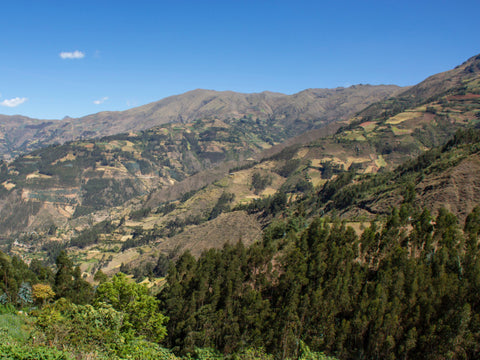
Cultivation: Nuna beans have been grown on the Andean mountains and valleys for thousands of years. Today, they are cultivated from Ecuador to Southern Peru on altitudes ranging from 1,900 to 2,900 meters above sea level. Nuna beans grow well between temperatures of 10°C to 25°C; however, in their environment, they can be exposed to frosts and drought that can severely affect their yield.
______________
1 Mesoamerica is a historical region and cultural area in North America. It extends from approximately central Mexico through Belize, Guatemala, El Salvador, Honduras, Nicaragua, and northern Costa Rica (Wikipedia).
2 Heirloom beans are grown from seeds that have been passed from one generation to another, carefully grown and preserved because they are considered valuable for distinctive traits.
Comparing nutritional characteristics, origin and current state of the industry of two of the most popular snacks in the world, popcorn and peanuts, with those of Peruvian popping beans. We want to identify the similarities and differences among them.
Description:
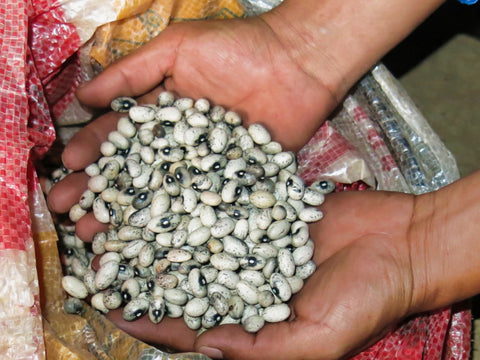
Nuna beans or Peruvian popping beans are legumes, a subspecies of the common bean (Phaseolus vulgaris). Popping beans are rich in protein, fiber, and provide vitamin B and micronutrients such as polyphenols. Legumes, in general, are low in fat and the ideal plant-based source of protein. Nuna beans differ from any other existing beans because it pops and expands, 1.3 to 1.8 times its initial volume, when exposed to heat; therefore, its preparation and cooking times are very short with no soaking and boiling needed.
-Photo: Peruvian Popping Beans-
Popcorn is a variety of corn kernel (Zea mays everta) that expands and puffs, 30 to 35 times its initial volume, when heated. Popcorn contains mostly carbohydrates, but it also has fiber and protein in smaller quantities; it also contains vitamin B and minerals.
Peanuts (Arachis hypogaea) are also legumes. Peanuts are a source of good fats, fiber and tocopherols, from vitamin E, which are antioxidants. Peanuts also contain the essential amino acids lysine and threonine that play an important role in body growth and performance.
Popped Nuna Beans (50 g)
Popcorn (50 g)
Raw Shelled Peanuts (50 g)
Calories
190
140
280
Total Carbohydrate (g)
34 g
35 g
8 g
Protein (g)
10 g
5 g
13 g
Fat (g)
1 g
2 g
25 g
Fibre (g)
9 g
9 g
4 g
Origin and History:
The common bean most likely was domesticated and originated around 8,000 years ago in the historic region of Mesoamerica (from Mexico to northern Costa Rica), from there it was dispersed and migrated to South America, from Peru to Argentina. The subspecies Popping beans were developed and cultivated exclusively in specific Andean regions of Peru, Bolivia and Ecuador. It is believed that through centuries Andean dwellers identified and gradually perpetuated the popping trait from common beans. Popping beans have been a staple and very valuable food source to the Andean population.
-Photo: Growing Popping Beans on Andean Terraces-
Corn originated about 9,000 years ago in Mexico from where it was subsequently carried to South America where its domestication and cultivation continued. In Peru and Mexico different types of corn, with distinct genetic variations, were discovered. Corn was a major and very important food source of the Azteca, Maya and Inca empire.
Peanuts presumably originated in South America and was domesticated around 7,000 years ago.
Common beans, corn, and peanuts -all three- made their way to Europe and later on to the entire world first thanks to Christopher Columbus’ voyages and contact with America. Interestingly popping beans were the only crop not widely adopted by the western countries; this perhaps due to the peculiarities and specific conditions needed for its cultivation. Apparently popping beans have daylength requirements and need extended hours of sunlight.
Current Cultivation and State of Industry:
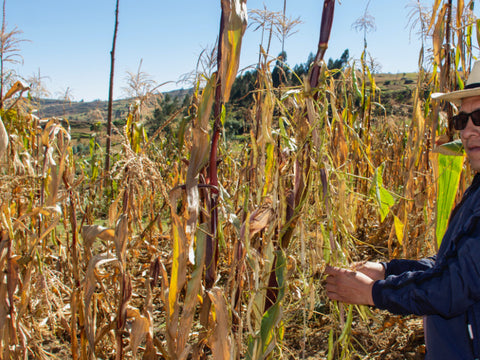
Popping beans are only cultivated in some Andean regions of Peru, Bolivia and Ecuador between 2,000 – 3,000 meter altitudes. Native communities eat it as a snack highly appreciated for its flavour and crunchiness. Popping beans are unknown and not readily available outside the Andean region.
-Photo: Popping Beans Ready For Harvest at 2,500 Meters Altitude –
Popcorn is an extremely popular and important snack food worldwide. It is grown in many different countries around the world, being the United States the world’s largest producer and exporter. There is a mature industry behind this crop and therefore there are a plethora of products and brands available in the market.
The commercial peanut industry is large and mature. China is the world’s top producer; followed by India, Nigeria, Sudan and the United States. This legume crop is widely grown and consumed in many countries around the world.
Common Dry Bean
Popping Bean
Popcorn
Peanut
Origin
Mesoamerica
Andean Mountains
Mexico
South America
Plant Type
Legume
Legume
Grain
Legume
Domestication (years ago)
~8,000
>8,000
~9,000
~7,000
Consumed as
Main Meal
Snack / Side Dish
Snack
Snack
Current Cultivation
Worldwide
Andean Mountains Only
Worldwide
Worldwide
Worldwide Production
~25 million metric tons
Not Available
~900 million metric tons
~47 million metric tons
Largest Producing Country (Yearly)
India and Myanmar / ~ 10 million metric tons together
Peru / Not Available
US / ~366 million metric tons
China / ~17 million metric tons
If you have not tried Popping beans, we invite you to do so. Nuna beans makes for a delicious snack with high nutritional value, proteins and fibre. It has no gluten and the carbohydrates are easy to digest. Peruvian popping beans are super crunchy and super easy to make.
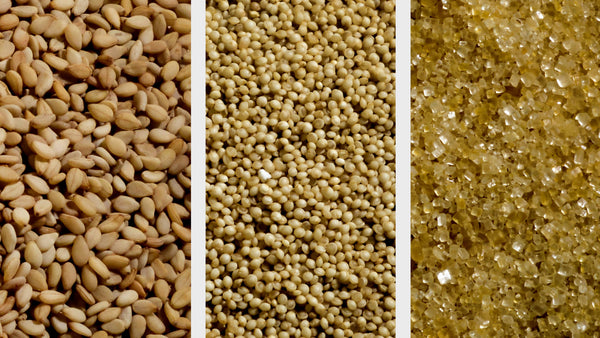
Sesame seed crops were first cultivated over 3000 years ago and it is considered the oldest oilseed crop known. It has been called a survivor crop, as it can grow in regions of high heat such as tropical areas of Asia, Africa and South America. The seeds are small, only about 3 to 4mm long by 2mm wide and 1mm thick and are rich in proteins, vitamins, minerals, and antioxidants. It is an oily seed, offering a much higher oil content than any other seeds, as well as a rich and nutty flavour with a crunchy texture. It is a great addition to vegan and vegetarian diets!
Amaranth is an ancient grain with more than 60 different species cultivated for about 8000 years, mainly in the summer and fall. Although it is categorized a grain, it is actually a seed, just like quinoa. Is was an important part of the Inca, Maya and Azteca’s everyday diet. It is classified as a pseudo-cereal, as it is not considered a cereal grain, like oats, but shares similar nutritional value. It has a nutty flavour, it is naturally gluten free and rich in protein, all nine essential amino acids, fibre, micronutrients and antioxidants.
Brown cane sugar contains molasses, which gives its golden brown colour. The flavour will vary depending on the amount of molasses the sugar contains; the darker the brown colour, the higher the molasses content. Darker brown sugar has a caramel and toffee taste along with a hint of acidity and bitterness in the aftertaste. The flavour is stronger and more complex, when compared to light brown and white sugars. The dark brown sugar’s nutritional value comes from minerals and vitamin B complex. Molasses is known to provide vitamins and minerals, including potassium, calcium, iron, magnesium, chlorine, and some B vitamins.
Sesame seeds, amaranth, and brown cane sugar are the main ingredients you will find in our Whole Crunch sesame snacks.

 Cart is empty